
Here is a selfish confession about how we decide what to build at Fold. We build the things that make our own lives easier first.
That sounds self-serving, and it is, a little. But the people on our team deal with the same things everyone else does: salaries, rent, cards, parents' FDs, and the occasional hospital visit. When something makes our money easier to deal with, it usually turns out to be useful for a lot of other people too.
Health insurance is the latest of those things.
A black box until the worst day
Most of us have a health policy. Many have two: one from an employer and one bought separately, or one for ourselves and one for our parents. We pay the premium, file the PDF somewhere in our email, and never think about it again.
Until the day we need it. And that is exactly when the policy starts revealing itself, one clause at a time, usually at a hospital billing desk:
Room rent limits. Many policies cap the room you can stay in, as a rupee amount per day or a percentage of the sum insured. Pick a room above the cap and it is not just the room that costs more. Many policies reduce the payout on the rest of the bill in the same proportion.
Waiting periods. Pre-existing conditions, and some specific treatments, are often not covered for the first few years of a policy, up to three years for pre-existing conditions under current IRDAI rules. If you switched insurers recently, the clock may have restarted.
Co-pay and sub-limits. Some policies, especially for senior citizens, make you pay a fixed share of every claim. Others cap specific treatments regardless of your sum insured.
Pre- and post-hospitalisation cover. Tests before admission and follow-ups after discharge are usually covered, but only for a set number of days, and only if you keep the bills.
Daycare procedures. Many treatments no longer need a 24-hour stay. Whether yours is covered as a daycare procedure depends on the list in your policy.
None of this is hidden. It is all in the policy wording, a document that runs to dozens of pages and that almost nobody reads before a claim. Through our own experiences, and a lot of conversations with Fold users, we realised that the best time to understand your insurance is on an ordinary day, with a cup of tea, not in a corridor outside the ICU.
Bring your policy to Fold
So we built a place for it. You can now add your health insurance to Fold from the Insurance tab:
- Open the Insurance tab and tap Add new.
- Fold looks for your policy documents in the email inbox you have connected, or you can upload the policy PDF yourself.
- That is it. Fold reads the policy and builds a summary.
We support policies from Digit, ICICI Lombard, Aditya Birla, HDFC ERGO, Niva Bupa, Star Health, National Insurance, Tata AIG, SBI General, Navi, New India Assurance, Bajaj General, Care and Acko today, with more insurers on the way.
What you see
Once your policy is in, Fold lays out the parts that matter in plain language:
The basics. The sum insured, the premium and the renewal date. You can link the premium to your recurring expenses so the renewal shows up on your calendar instead of surprising you.
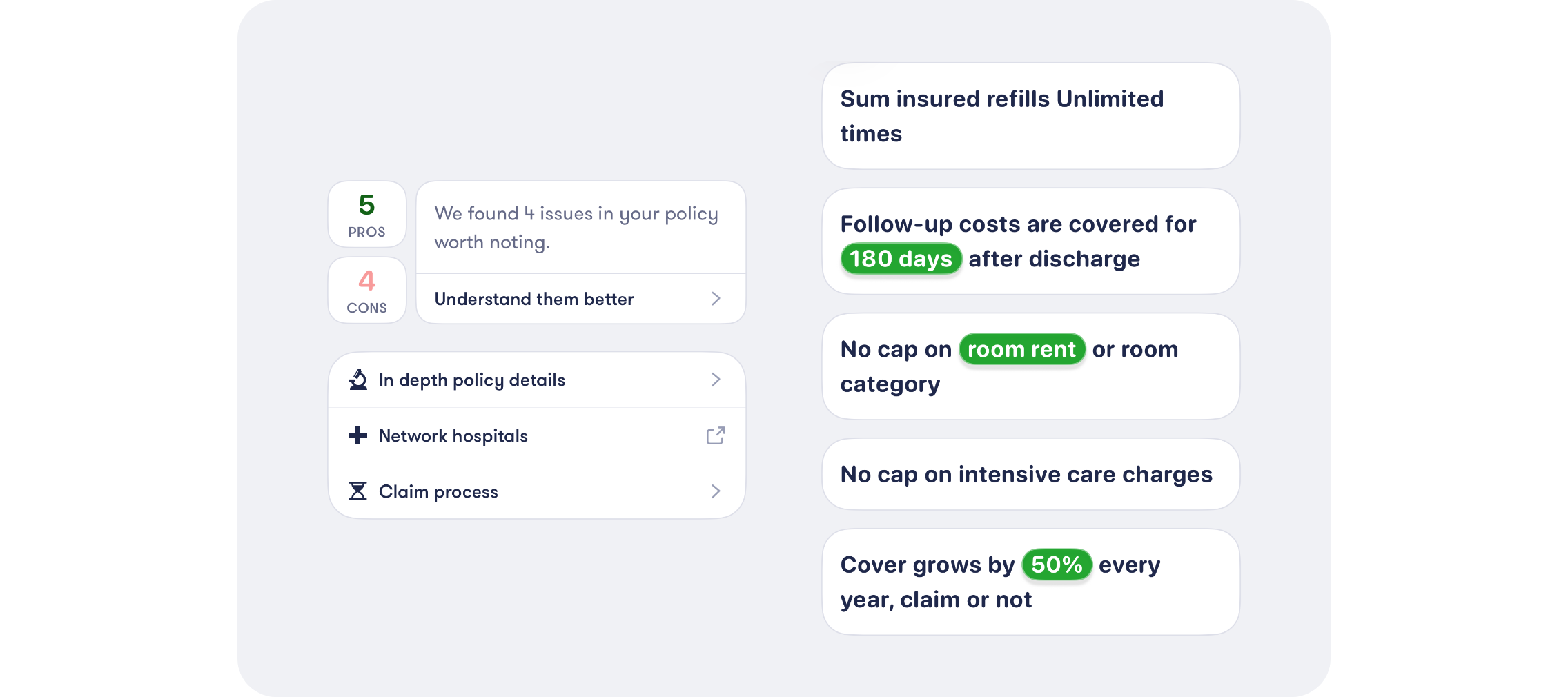
What it covers and what it doesn't. Coverage, exclusions, waiting periods, room rent limits and the other terms that decide a claim, pulled out of the policy wording and shown together.
The pros and cons of your policy. A short, honest list of where your policy is strong and where it is thin, so you know what you are relying on.
Your insurer, at a glance. Their claims helpline and email, how to file a claim, and how the insurer has performed, using public data from IRDAI such as their incurred claim ratio and how many complaints they receive per 10,000 claims.
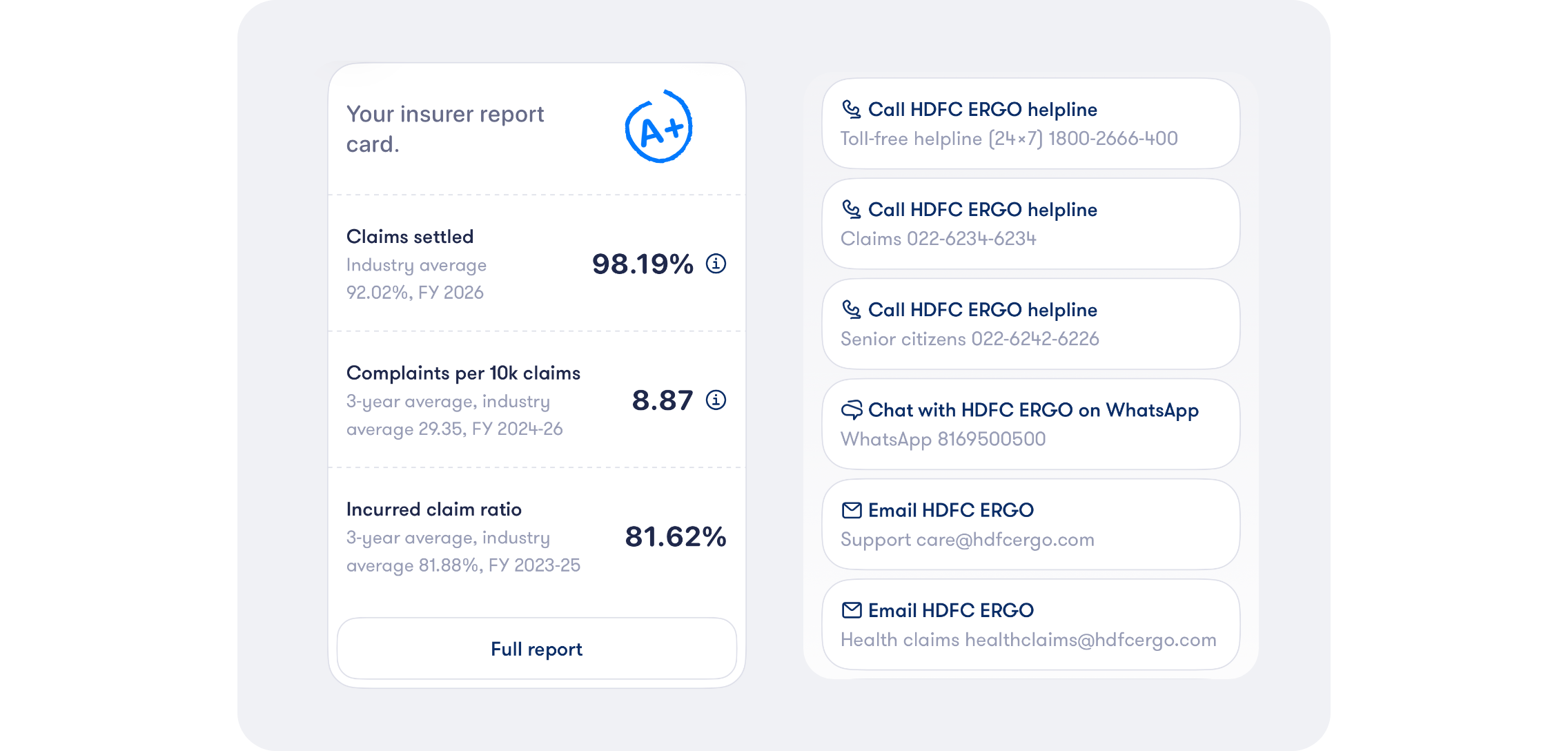
All of it in one place, easy to read, and easy to find on the day you need it. If a family member is ever in hospital and you are the one handling the paperwork, you will know exactly what to ask and who to call.
When you have more questions
Sometimes a summary is not enough. You might want to know whether to top up your cover, port to a different insurer, or add your parents to a separate policy. For that, Fold has a Have questions? option that connects you with Ditto, an insurance advisory service we partner with, for an unbiased review of your policy.

Behind the scenes
Reading insurance policies turned out to be harder than reading bank statements. Every insurer formats their documents differently, the important numbers are often buried in tables and footnotes, and a single policy can run across several PDFs. We made a short video about how we built this.
What is next
We started with health insurance because it is the policy people most often misunderstand and most urgently need. We want to bring other kinds of insurance to Fold over time, so everything that protects your money sits next to the money itself.
If you add your policy and something looks wrong, or there is a detail you wish Fold showed, tell us at [email protected]. We read every message.